- +91-8808808186
- 11:00 AM - 01:00 PM | 04:00 PM - 06:00 PM
Best Robotic, Laparoscopic, Bariatric, Gastrosurgeon of Surat

Dr Dharmesh Dhanani
MS, FNB (Minimal Access Surgery), FACS, FALS, FMAS, FAIS
Consultant Gastrosurgeon, Bariatric & Laparoscopic Surgeon
Colon cancer is one of the most common cancers affecting millions of people worldwide. Early diagnosis and advanced surgical treatment play a crucial role in improving survival rates and quality of life. With significant advancements in medical technology, robotic surgery for colon cancer has emerged as one of the most precise and effective treatment options available today.
At Kiran Hospital, Surat, Dr. Dharmesh Dhanani, a leading Robotic, Laparoscopic, and Gastrointestinal Surgeon, offers state-of-the-art robotic surgery for colon cancer, helping patients achieve better outcomes with minimal discomfort and faster recovery.
Understanding Colon Cancer
Colon cancer, also known as colorectal cancer, develops in the large intestine (colon) and often begins as small, non-cancerous polyps that gradually become cancerous over time.
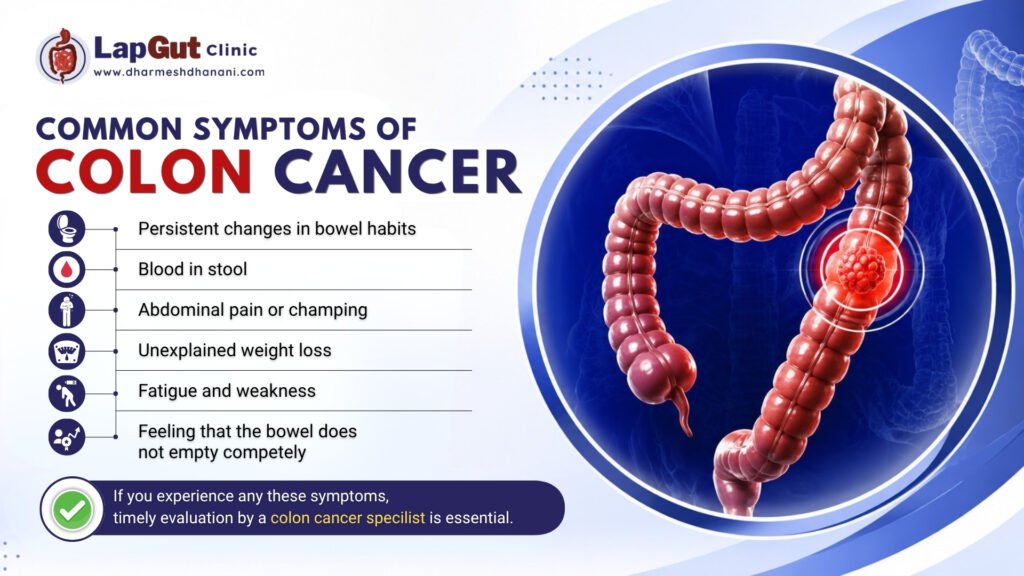
Common Symptoms of Colon Cancer
- Persistent changes in bowel habits
- Blood in stool
- Abdominal pain or cramping
- Unexplained weight loss
- Fatigue and weakness
- Feeling that the bowel does not empty completely
If you experience any of these symptoms, timely evaluation by a colon cancer specialist is essential.
What is Robotic Surgery for Colon Cancer?
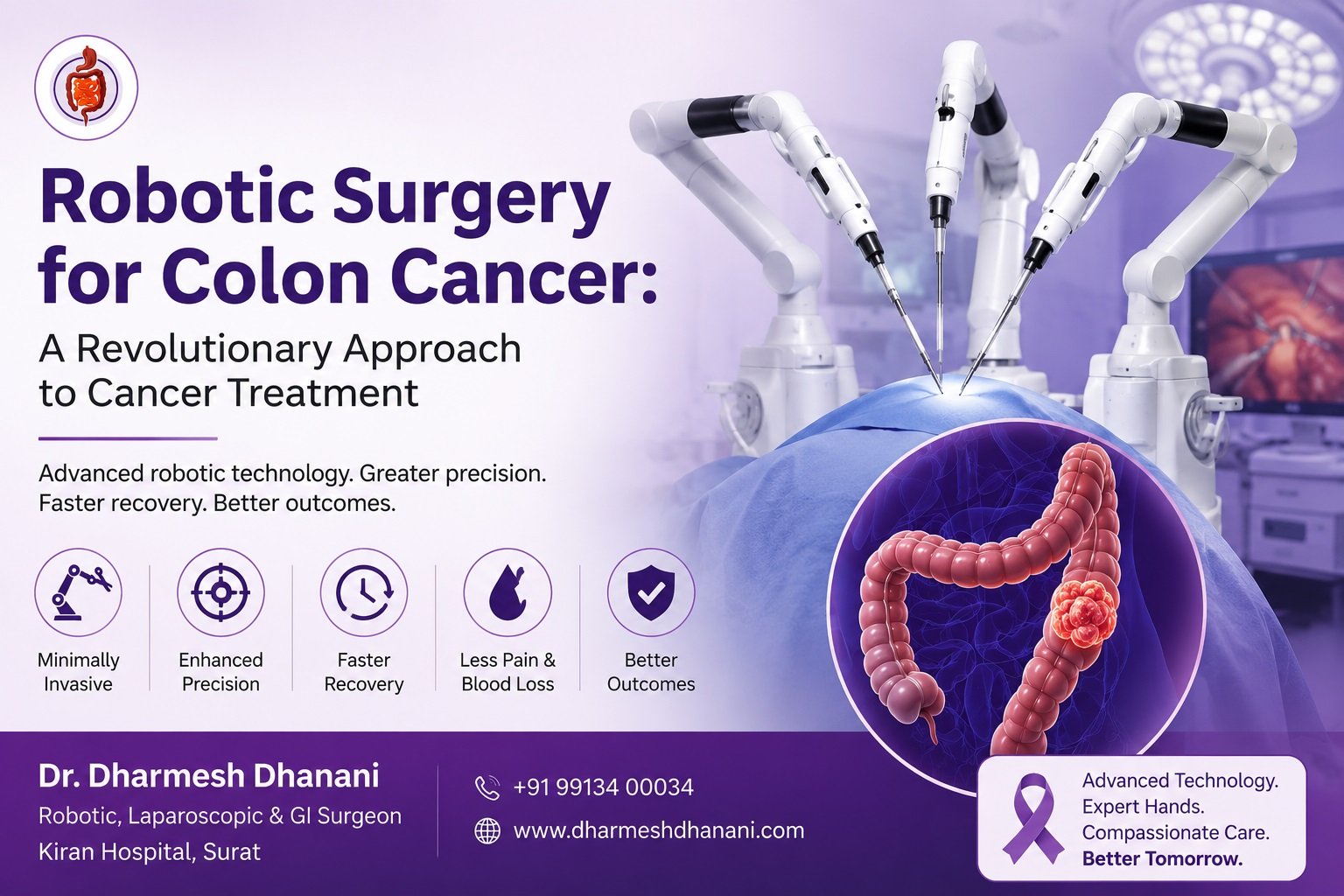
Robotic surgery is an advanced minimally invasive surgical technique that allows surgeons to perform complex procedures using robotic-assisted technology. The surgeon controls robotic instruments from a specialized console, ensuring exceptional precision, flexibility, and control.
During robotic colon cancer surgery, small incisions are made through which robotic instruments and a high-definition 3D camera are inserted. The robotic system translates the surgeon’s hand movements into precise micro-movements inside the body.
Contrary to popular belief, the robot does not operate independently. Every movement is completely controlled by the surgeon.
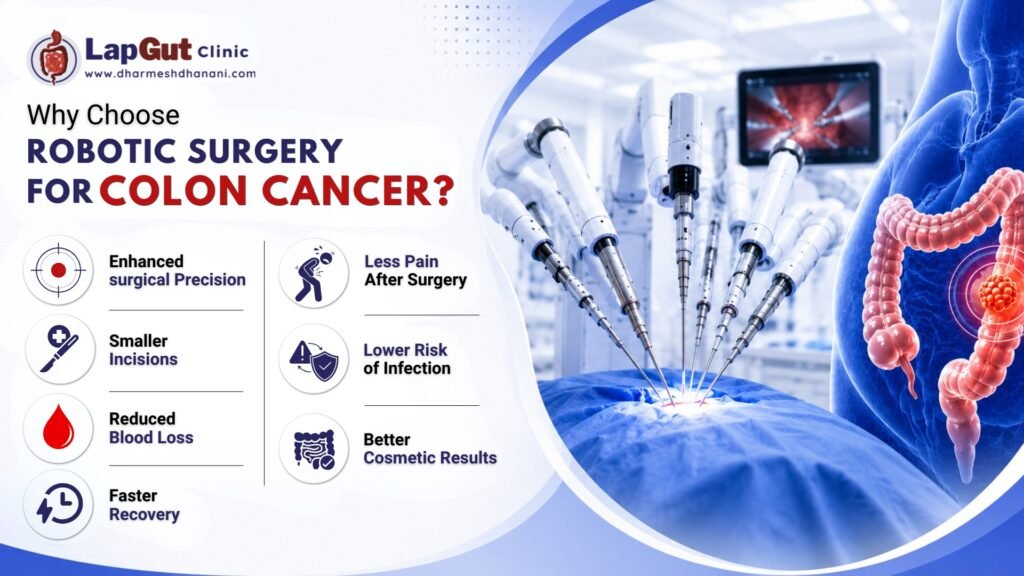
Why Choose Robotic Surgery for Colon Cancer?
Robotic surgery has transformed the treatment of colorectal cancer by offering several advantages over traditional open surgery.
- Enhanced Surgical Precision
- Smaller Incisions
- Reduced Blood Loss
- Faster Recovery
- Less Pain After Surgery
- Lower Risk of Infection
- Better Cosmetic Results
Conditions Treated with Robotic Colorectal Surgery
Robotic surgery can effectively treat:
- Colon Cancer
- Rectal Cancer
- Sigmoid Colon Cancer
- Cecal Tumors
- Ascending Colon Cancer
- Descending Colon Cancer
- Recurrent Colorectal Cancer
- Complex Colorectal Diseases
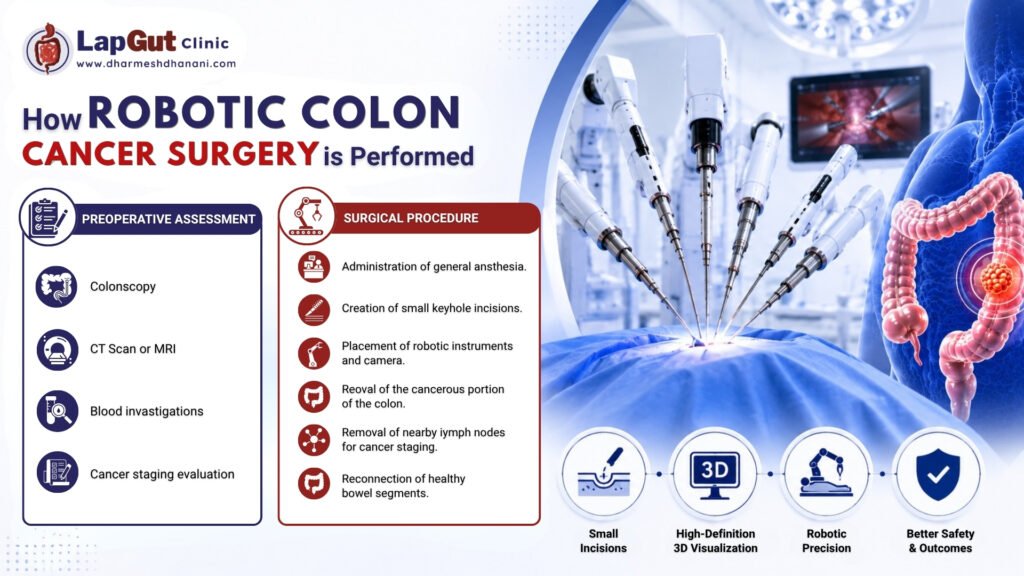
How Robotic Colon Cancer Surgery is Performed
Preoperative Assessment
Before surgery, patients undergo:
- Colonoscopy
- CT Scan or MRI
- Blood investigations
- Cancer staging evaluation
Surgical Procedure
The procedure generally involves:
- Administration of general anesthesia.
- Creation of small keyhole incisions.
- Placement of robotic instruments and camera.
- Removal of the cancerous portion of the colon.
- Removal of nearby lymph nodes for cancer staging.
- Reconnection of healthy bowel segments.
The duration of surgery depends on the complexity and stage of the cancer.
Recovery After Robotic Colon Cancer Surgery
One of the biggest advantages of robotic surgery is faster recovery.
Most Patients Experience:
- Shorter hospital stay
- Earlier return of bowel function
- Reduced pain medication requirements
- Faster return to daily activities
- Lower complication rates
Most patients can resume routine activities within a few weeks, depending on their overall health and surgical complexity.
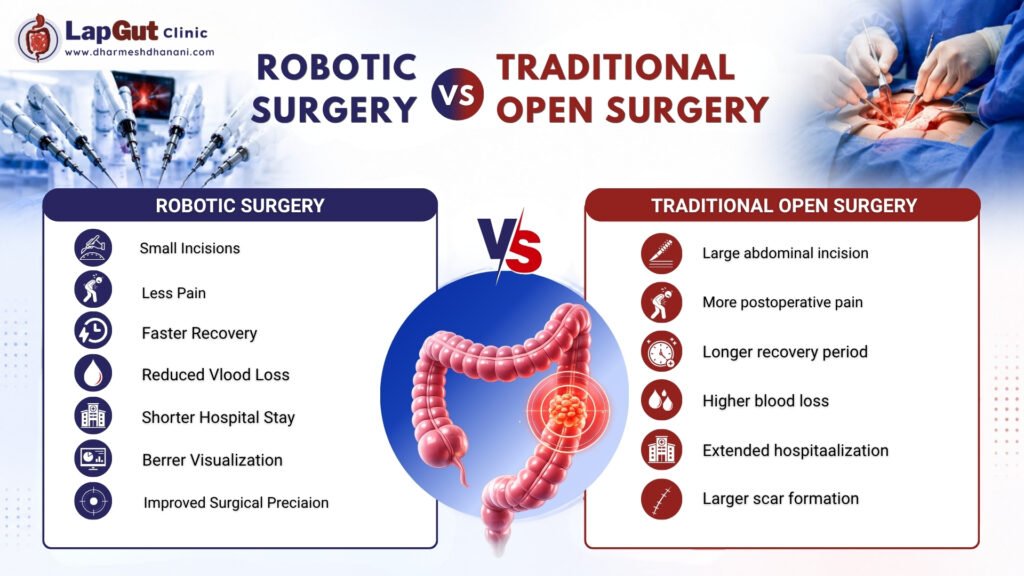
Robotic Surgery vs Traditional Open Surgery
Robotic Surgery
- Small incisions
- Less pain
- Faster recovery
- Reduced blood loss
- Shorter hospital stay
- Better visualization
- Improved surgical precision
Traditional Open Surgery
- Large abdominal incision
- More postoperative pain
- Longer recovery period
- Higher blood loss
- Extended hospitalization
- Larger scar formation
For suitable patients, robotic surgery offers significant advantages over conventional open procedures.
Is Robotic Surgery Safe for Colon Cancer?
Yes. Robotic surgery is considered a safe and effective treatment option for appropriately selected patients. Numerous studies have demonstrated excellent cancer control outcomes comparable to or better than conventional approaches while providing the benefits of minimally invasive surgery.
Success depends on proper patient selection, cancer stage, and the expertise of the operating surgeon.
Frequently Asked Questions
Robotic surgery offers enhanced visualization, greater instrument flexibility, and improved precision in complex colorectal cancer procedures.
The surgery typically takes between 2 to 5 hours depending on the complexity and extent of the disease.
No. Robotic surgery uses small keyhole incisions that result in minimal scarring.
Most patients stay in the hospital for approximately 3 to 5 days, depending on recovery progress.
In many cases, robotic surgery can effectively remove the cancer along with surrounding lymph nodes as part of curative treatment.
Why Choose Dr. Dharmesh Dhanani for Robotic Colon Cancer Surgery in Surat?
Dr. Dharmesh Dhanani is one of Surat’s leading Robotic, Laparoscopic, and Gastrointestinal Surgeons with extensive experience in treating complex gastrointestinal cancers.
Expertise Includes:
- Robotic Colon Cancer Surgery
- Robotic Rectal Cancer Surgery
- Gastrointestinal Cancer Surgery
- Advanced Laparoscopic Surgery
- Liver and Pancreatic Surgery
- Minimally Invasive Cancer Procedures
Patients benefit from personalized treatment planning, advanced surgical technology, and comprehensive postoperative care.
Conclusion
Robotic surgery for colon cancer represents a major advancement in modern cancer care, offering patients a safer, less invasive, and highly precise treatment option. With benefits such as reduced pain, quicker recovery, shorter hospital stays, and excellent oncological outcomes, robotic colorectal surgery has become a preferred choice for many patients.
If you or a loved one has been diagnosed with colon cancer, consult Dr. Dharmesh Dhanani in Surat to explore advanced robotic surgery options and receive expert, compassionate cancer care.