- +91-8808808186
- 11:00 AM - 01:00 PM | 04:00 PM - 06:00 PM
Best Robotic, Laparoscopic, Bariatric, Gastrosurgeon of Surat

Dr Dharmesh Dhanani
MS, FNB (Minimal Access Surgery), FACS, FALS, FMAS, FAIS
Consultant Gastrosurgeon, Bariatric & Laparoscopic Surgeon
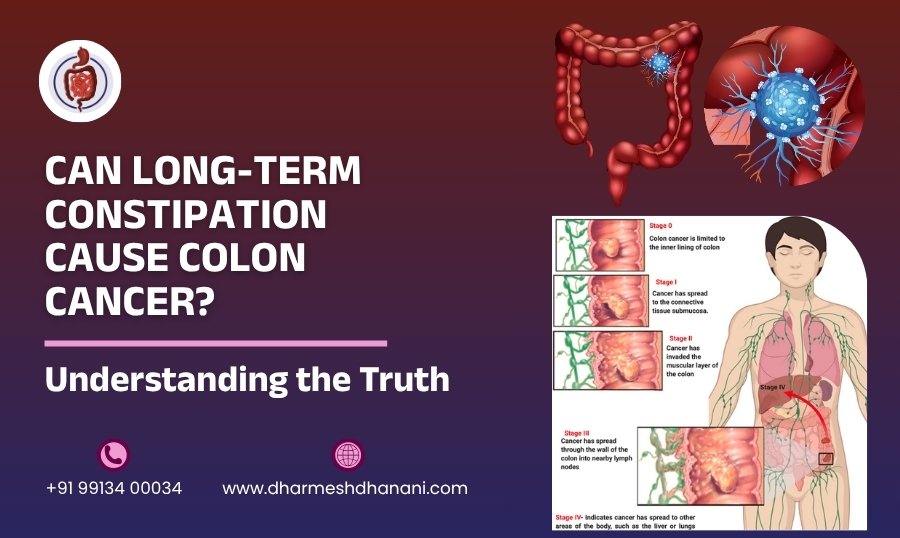
Constipation is one of the most common digestive complaints among people in Surat, South Gujarat, Navsari, Valsad, Bharuch, Bardoli, and nearby regions. Many patients visiting Kiran Hospital ask a common and concerning question:
“If I have constipation for many months or years, can it turn into colon cancer?”
The short answer is: Constipation itself does not directly cause colon cancer — but ignoring long-term constipation can increase risk factors and delay diagnosis of serious conditions.
What Counts as Long-Term Constipation?
Constipation is more than just difficulty passing stools. You may have chronic constipation if you experience:
- Fewer than 3 bowel movements per week
- Hard, dry stools
- Straining during stools
- A feeling of incomplete evacuation
- Bloating or abdominal discomfort
- Using laxatives regularly
When these symptoms last for more than 3 months, it is considered chronic constipation.
Is Constipation Itself the Cause of Colon Cancer?
No. Constipation alone does not directly trigger colon cancer.
However, the conditions that lead to chronic constipation and the consequences of untreated constipation may increase the risks.
How Constipation Can Be Linked to Higher Cancer Risk
- Prolonged Exposure to Toxins
Hard stools stay longer in the colon, which may increase exposure of the colon lining to harmful chemicals. - Low-Fibre Diet
A major cause of constipation — a low-fibre diet — is also a known risk factor for colon cancer. - Sedentary Lifestyle
People with less physical activity often experience constipation and also have higher colon cancer risk. - Ignoring Symptoms
Sometimes, people assume blood in the stool, weight loss, or changes in bowel habits are “just constipation” — delaying cancer detection. - Underlying Diseases Causing Constipation
Conditions like polyps, inflammatory bowel disease (IBD), or even early colon cancer may present as constipation.
So even though constipation does not “turn into” cancer, it can mask early signs of colon cancer.
When to Be Concerned? Warning Signs
If you have chronic constipation with any of these symptoms, consult a gastro surgeon immediately:
- Blood in stool
- Unexplained weight loss
- Severe abdominal pain
- Weakness or anaemia
- Sudden change in bowel habits
- Family history of colon cancer
- Age > 45 years
These could indicate more serious issues requiring evaluation.
Who Is at Higher Risk of Colon Cancer?
People in Surat and surrounding areas should be cautious if they have:
- Age above 45
- Chronic constipation for years
- Low water intake (very common in Gujarat)
- Diet low in fibre, high in oily/spicy foods
- Obesity
- Sedentary lifestyle
- Smoking or alcohol habits
- Family history of colon or GI cancers
Lifestyle factors commonly seen in South Gujarat — such as high junk food intake, low fibre meals, and dehydration — further increase risks.
How Is Colon Cancer Detected?
At Kiran Hospital, Surat, colon cancer screening includes:
- Colonoscopy – A camera-based test to check for polyps, inflammation, or cancer.
- CT Scan / CT Colonography – Helps visualize the large intestine.
- Stool Occult Blood Test (FIT Test) – Detects tiny amounts of blood not visible externally.
- Biopsy – If a polyp or suspicious mass is found.
Early detection greatly increases treatment success.
How Is Chronic Constipation Treated?
Dr. Dharmesh Dhanani focuses on root-cause based treatment, not just temporary relief.
Treatment Includes:
- Increasing fibre intake
- Hydration correction
- Physical activity
- Stool softeners (when needed)
- Treating underlying conditions like piles, fissures, polyps, IBS, or diverticulitis
- Preventive colonoscopy for patients over 45
Can Colon Cancer Be Prevented?
Yes — especially when lifestyle changes are made early.
Preventive Measures:
- Eat fibre-rich foods (salads, fruits, whole grains)
- Drink 2–3 litres of water daily
- Exercise 30 minutes a day
- Avoid smoking and alcohol
- Reduce red meat & junk food
- Screening after age 45
- Do not ignore chronic constipation
Early intervention by a skilled gastro & laparoscopic surgeon helps avoid complications.
Conclusion
Long-term constipation does not directly cause colon cancer, but it may:
- indicate underlying diseases
- hide early symptoms
- contribute to risk-enhancing habits
If you have persistent constipation for months, especially with warning signs, timely evaluation is essential.